West Cork Palaeoecology

The Environment of West Cork through Time

  • admin@westcorkpalaeo.com
  • +353 (0)83 0744708

West Cork Palaeoecology

The Environment of West Cork through Time

Visit the Blogsite at westcorkpalaeo.ie (new tab)

Search WestCorkPalaeo.com: results will display in a new tab:
 
  • admin@westcorkpalaeo.com
  • +353 (0)83 0744708
  • Welcome
    • Palaeoecology in West Cork
    • What Palaeoecology Is
    • Site Map
  • Palaeoecology of West Cork
    • Palaeoecological Environments
    • Biodiversity
    • Ecology and Ecosystems
    • Soils and Soil Sampling
    • Ireland's Flora
    • Palaeoecological Proxies
  • Humans In Ireland
    • Humans In Ireland
    • Anthropic Principle
    • Anthropogenic Indicators
    • Plants in Human Culture
    • Ringforts
  • Sites in West Cork
    • Sites in West Cork
    • Three Lakes (bog and lake)
    • Glandart Lake
    • Ballin Lough (bog and lake)
    • Driminidy Lough (bog and lake)
    • Rearahinagh (agricultural soil)
    • IQUA Field Trip (glacial features)
    • Ruagagh Valley (glacial features)
    • Other Sites to be Added
  • In The Lab
    • In The Lab
    • Light Microscopes
    • Pollen and Spore Preparation
    • Radiocarbon Dating
    • Timescales
    • Map Creation
  • Blog
    • Blog
  • About
    • Contact
    • About Us
    • Version - P1.07.2022
    • FAQ

Alder - Alnus glutinosa and Alnus incana

A large single to multistemmed tree commonly found growing in wet ground. Bacterial nodules on the roots of alders fix atmospheric nitrogen. Alder trees flower in early spring, each tree bearing both male and female flowers (monoecious), usually as the hazel comes to an end of flowering. The male flowers are catkins, and produce large amounts of pollen. The female flowers are small, red, and insignificant, on a swollen green bulb. Similar is Italian Alder ( A. cordata) which is often grown in plantations - native alder has more rounded leaves, browner bark, and is more inclined to be multistemmed. Leaves are distinctly asymmetrical, lopsided even.

The preference for wet conditions shown by Alder, and the high pollen production, has resulted in high levels of pollen being preserved, not always representative of the trees density. However, alder pollen can be expected to be high above (after) a recurrence surface, i.e. where the environment has experienced a change from drier conditions, to wetter. Thus birch growing under drier conditions die out - the pollen max occurring below the recurrence surface - and the alder takes over in the wetter conditions.

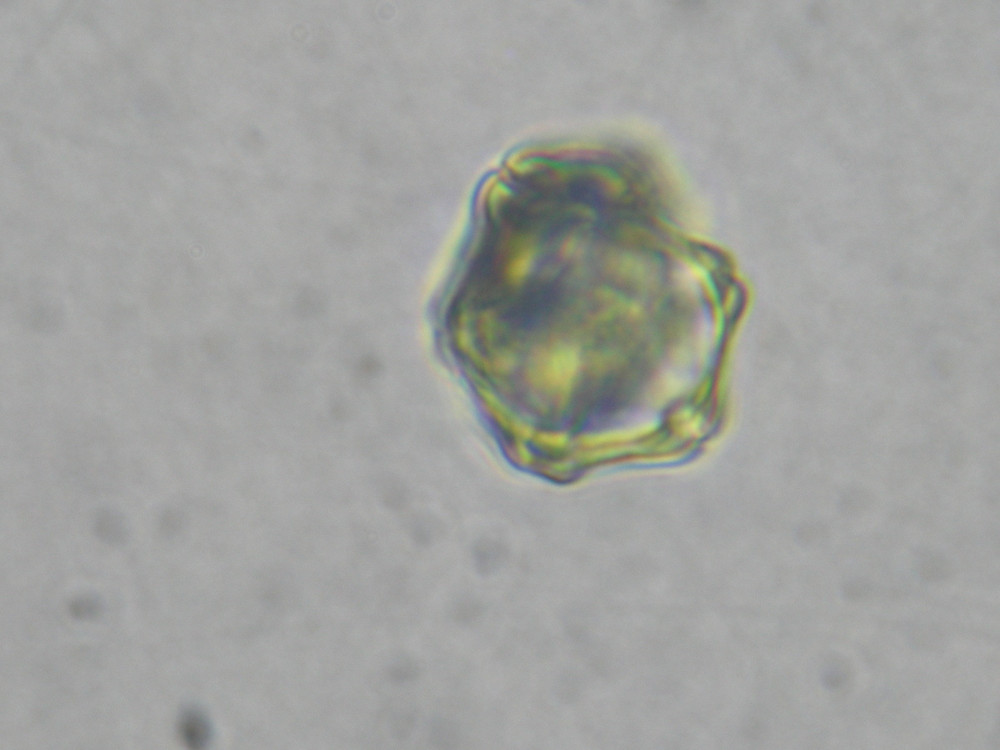
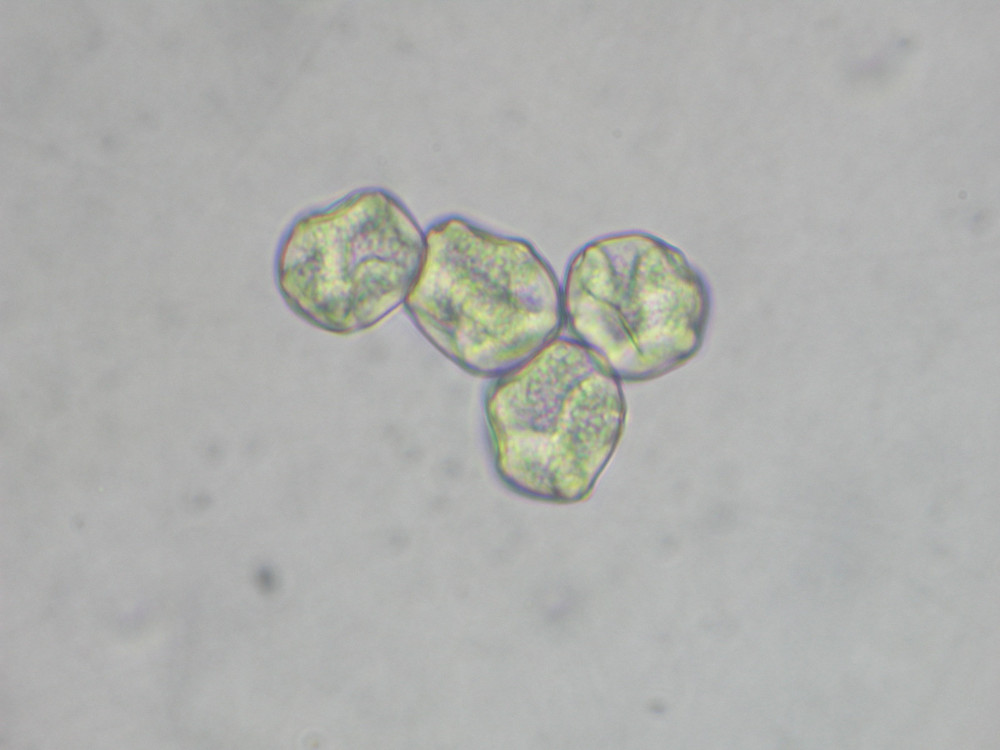
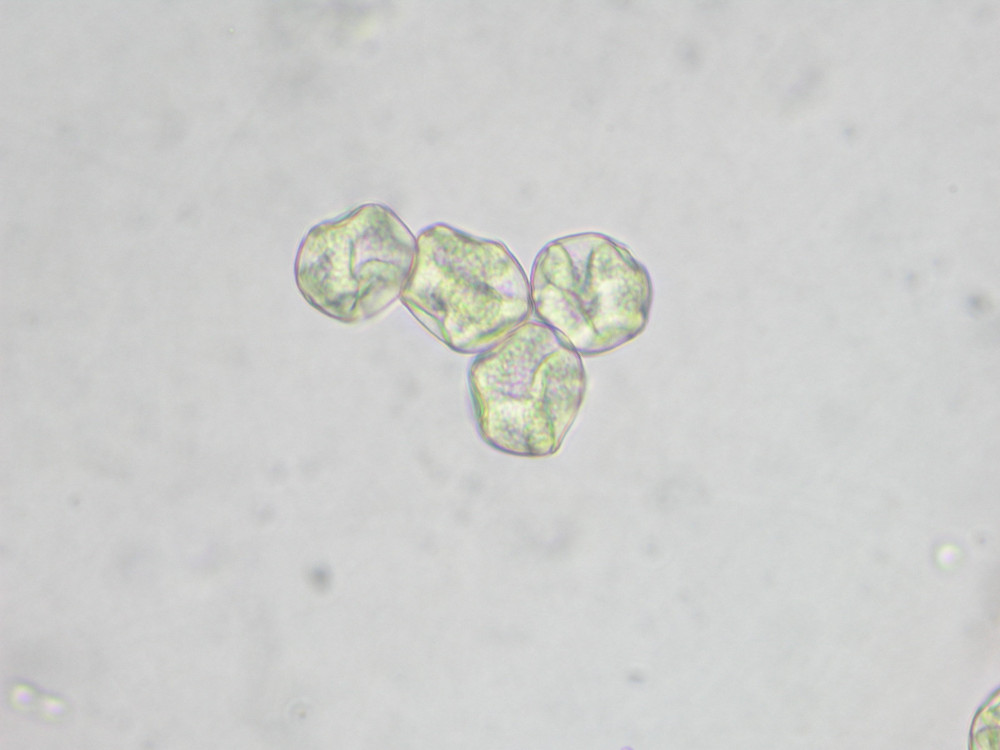
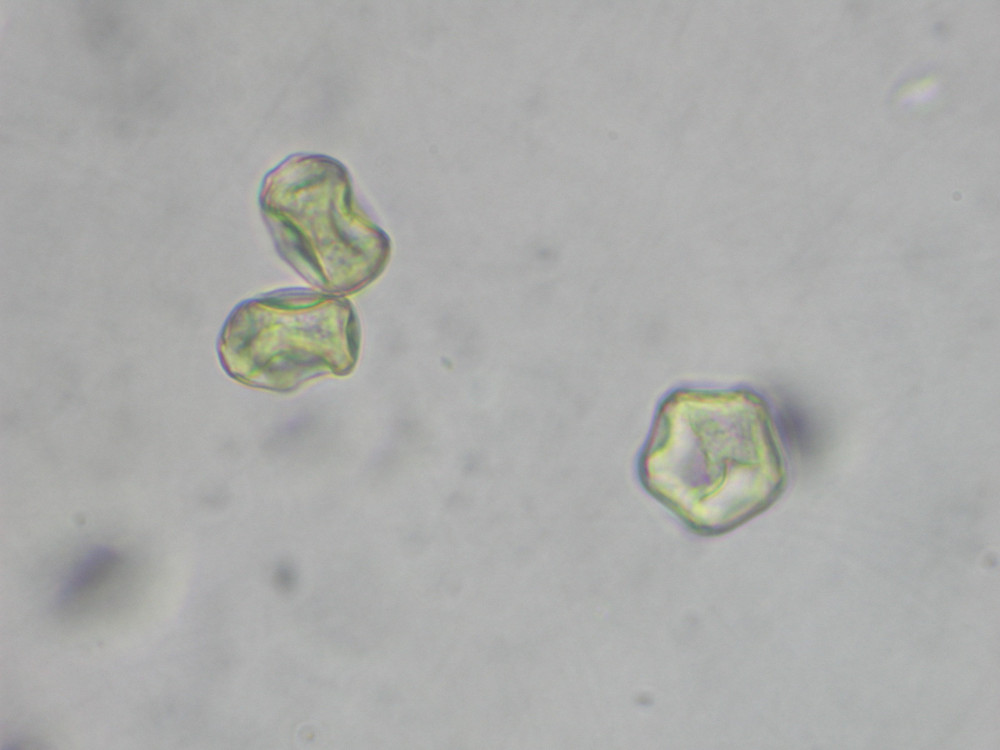
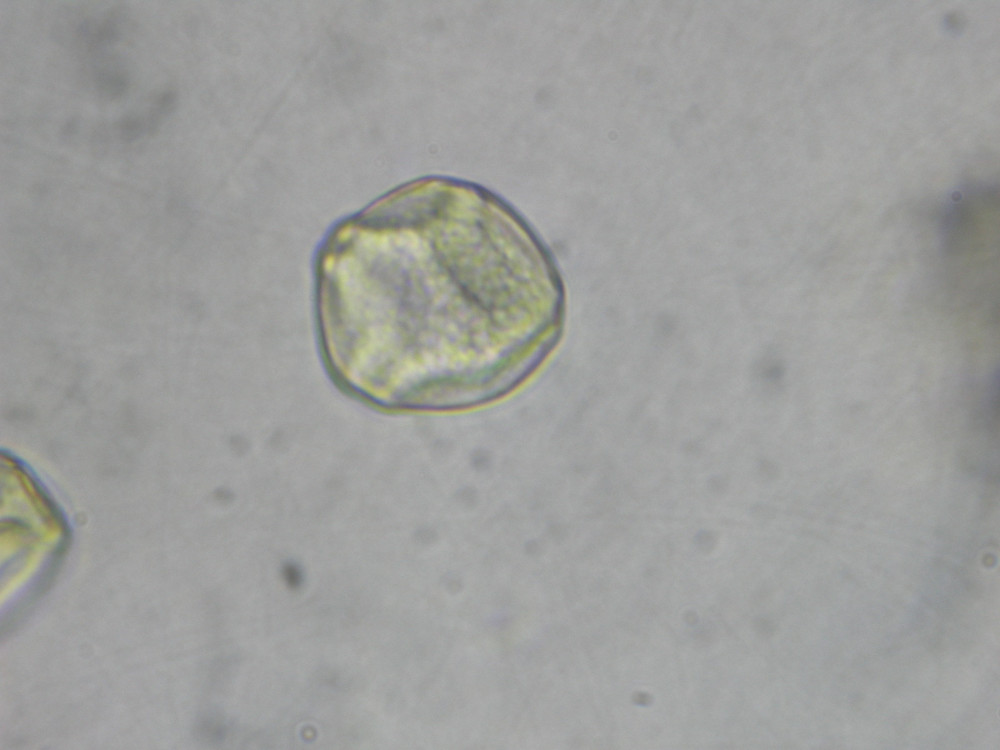
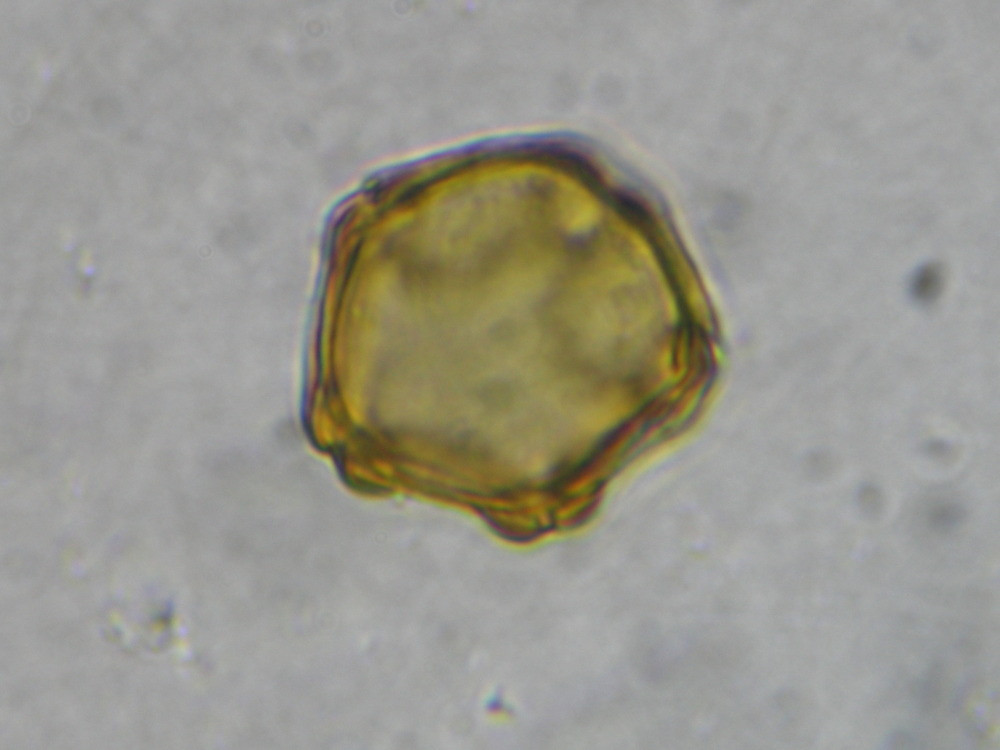
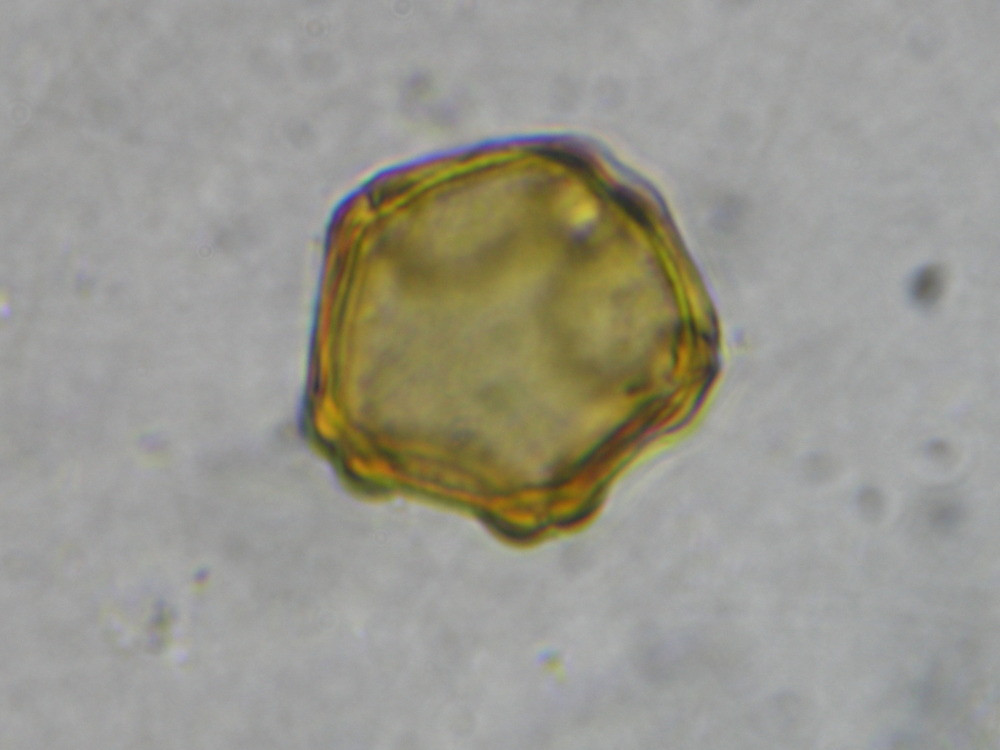
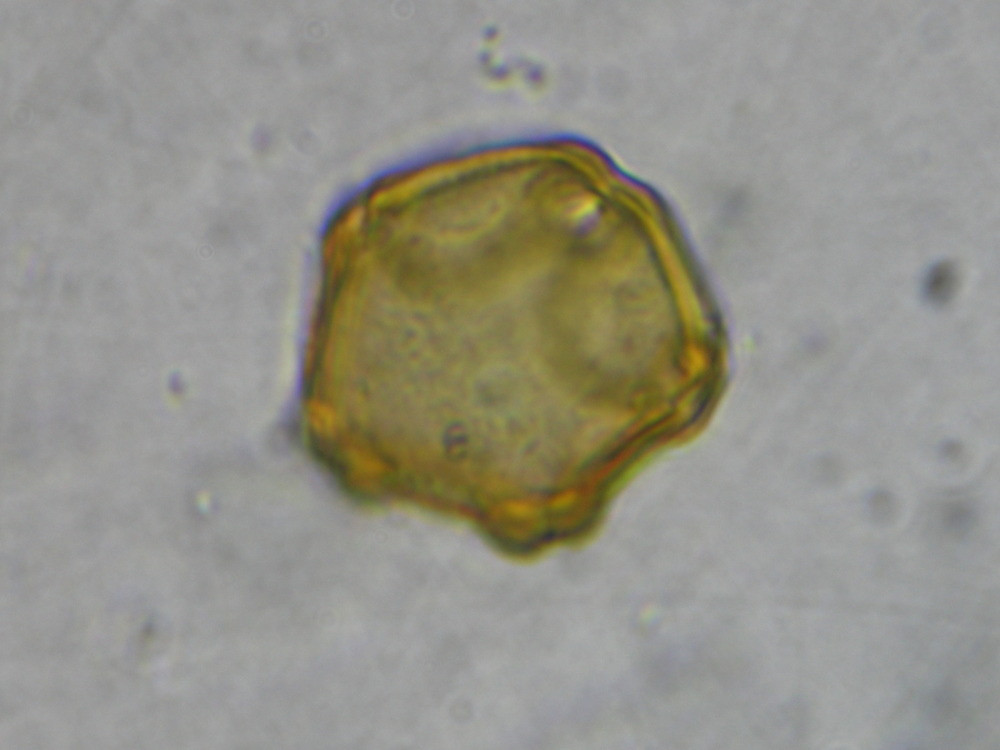
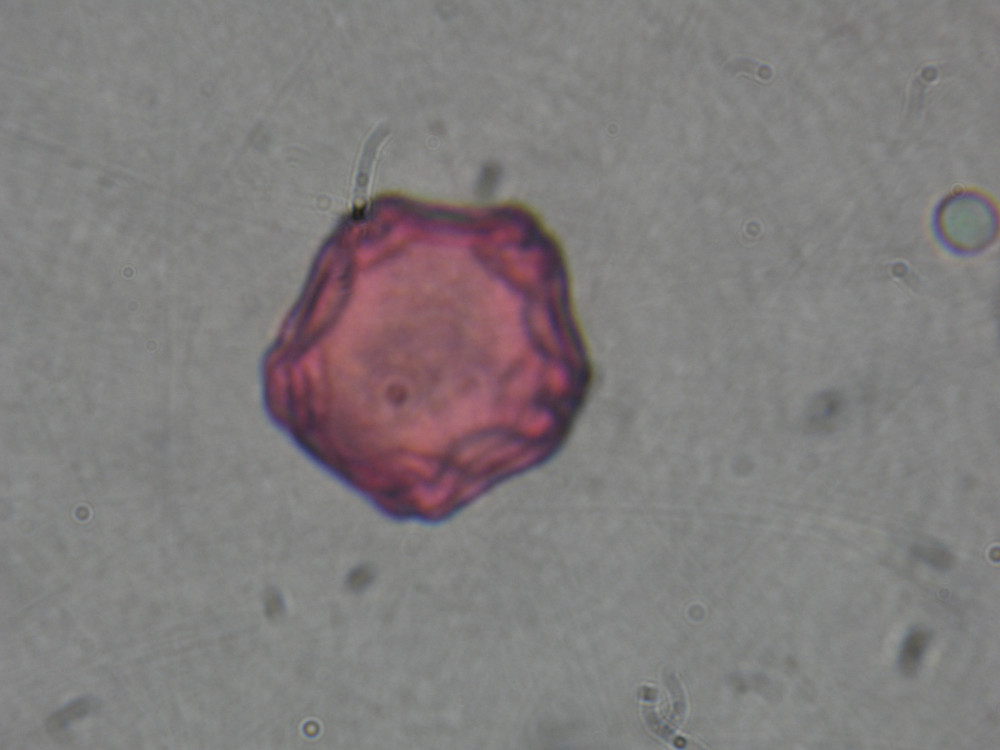
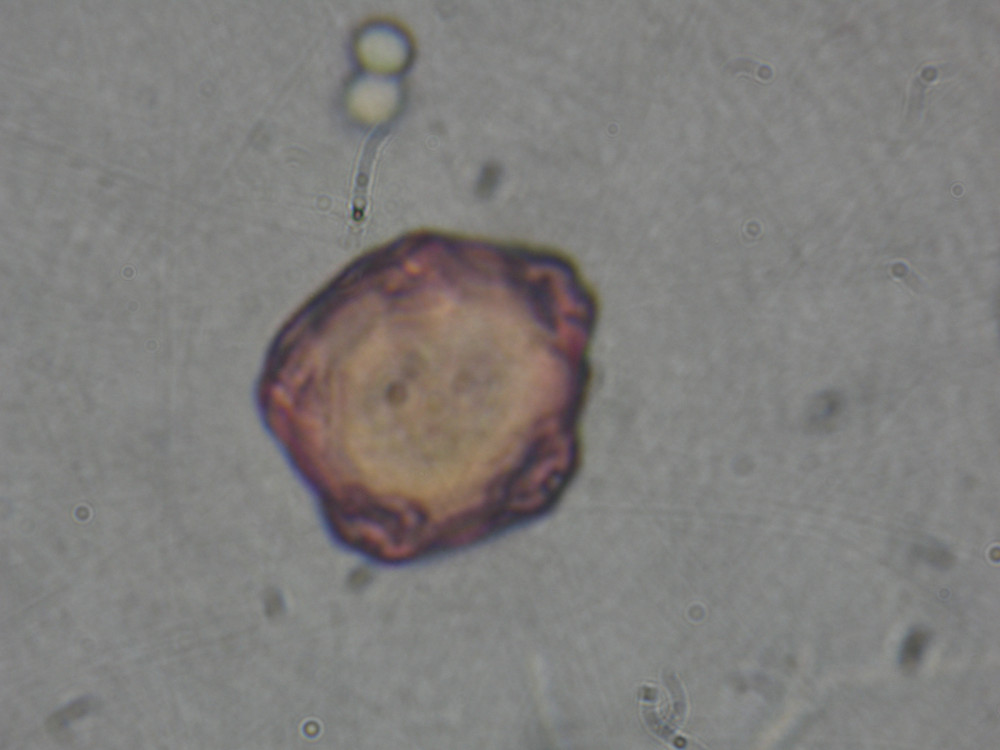
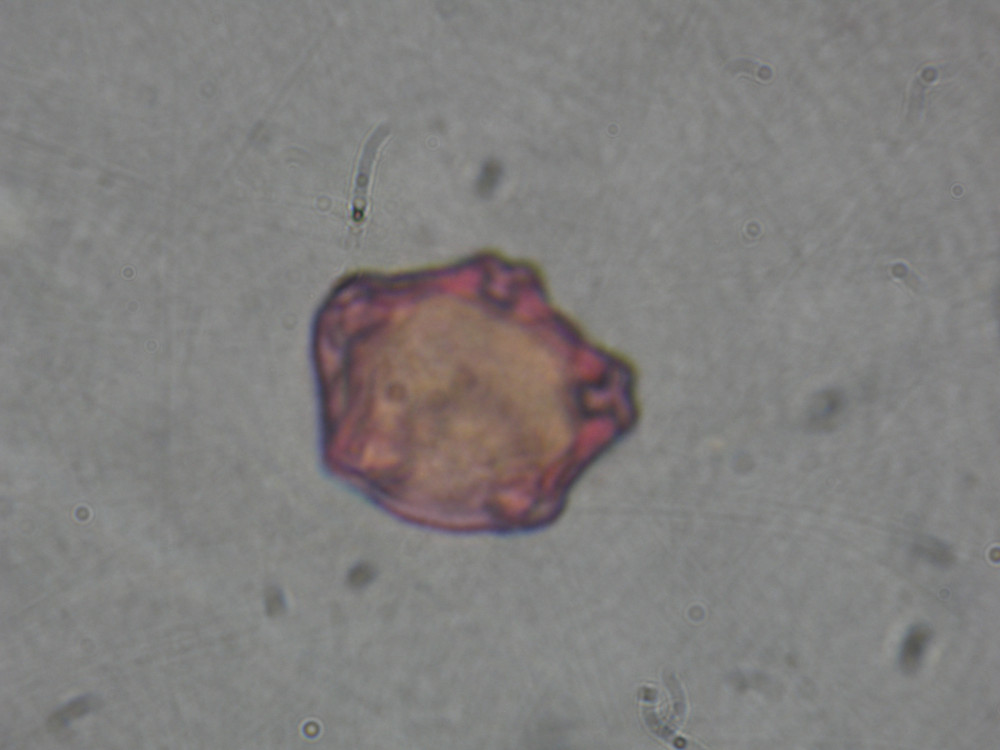
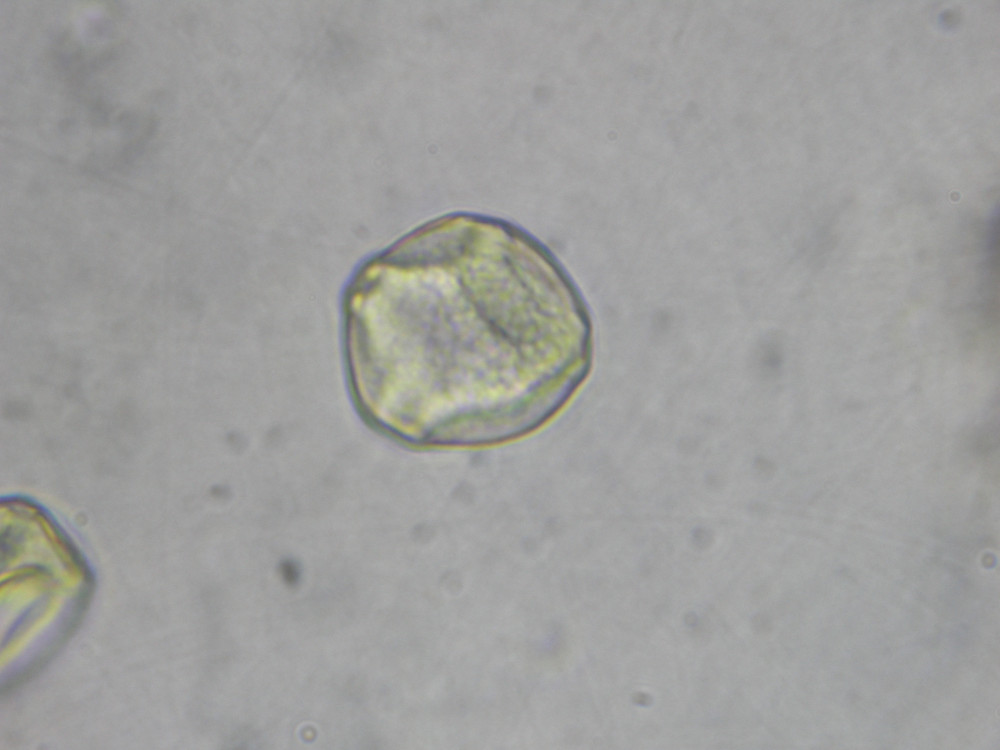
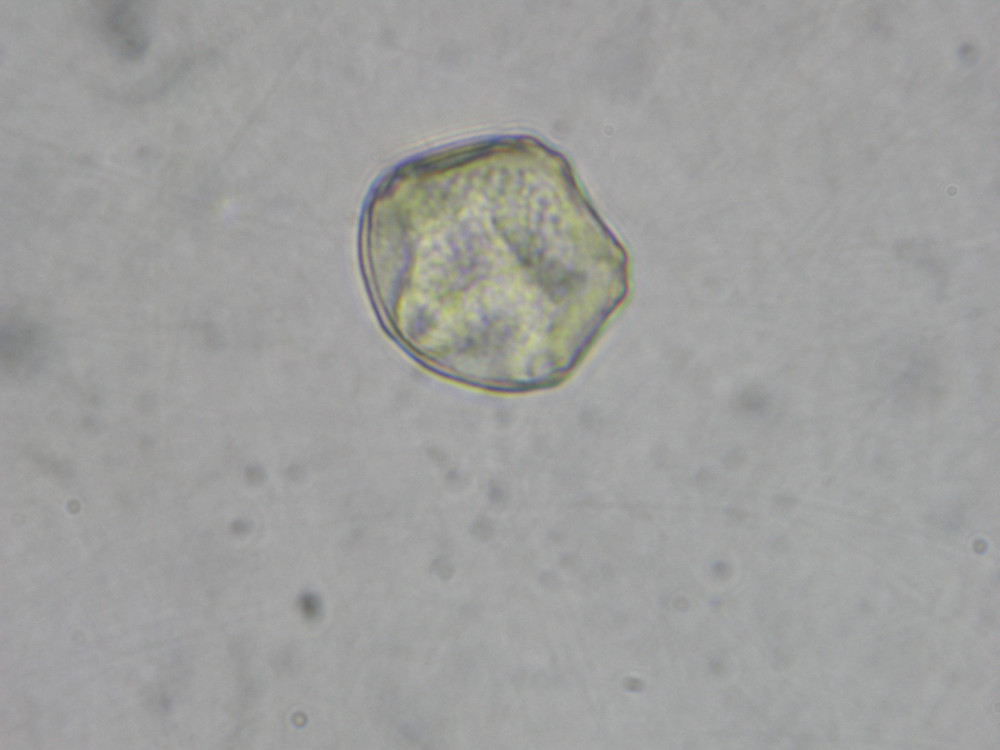
Pollen grains are distinctive rounded five sided or less usually six or four sided. There are often distinct arcs between adjacent pores. Six, five, or four, large and clear pores, one on each apex of the grain. About 25-30 microns across. Very easily distinguished.
  • Pollen
  • Spores
  • Diatoms
  • Pollen Facts
  • Pollen Genera
  • Acer
  • Achillea
  • Ajuga
  • Alnus
  • Arbutus
  • Asteraceae
  • Betula
  • Carex
  • Carpinus
  • Corylus
  • Cratagus
  • Epilobium
  • Fagus
  • Fraxinus
  • Ilex
  • Juniperus
  • Larix
  • Myrica
  • Picea
  • Pinus
  • Plantago
  • Poaceae
  • Prunus
  • Quercus
  • Salix
  • Taraxacum
  • Taxus
  • Tripleurospermum
  • Ulex
  • Ulmus
  • Umbellifer
  • Urtica
  • Unidentified
  • Bracken (Pteridium aquilinum)
  • Male Fern
  • Polypody
  • (Blechnum spicant)
  • Lady Fern
  • To be added
  • Diatom facts
  • Diatom genera
  • Achnanthidium
  • Amphora
  • Aulacoseira
  • Brachysira
  • Caloneis
  • Cavinula
  • Cocconeis
  • Cyclotella
  • Cymbella
  • Cymbopleura
  • Encyonema
  • Epithemia
  • Eunotia
  • Fragilaria
  • Frustulia
  • Geissleria
  • Gomphonema
  • Halamphora
  • Hannaea
  • Mayamaea
  • Meridion
  • Navicula
  • Naviculadicta
  • Nitzschia
  • Pinnularia
  • Planothidium
  • Pseudopodosira
  • Pseudostaurosira
  • Reimeria
  • Rhopalodia
  • Sellaphora
  • Stauroforma
  • Stauroneis
  • Staurosira
  • Surirella
  • Tabellaria
  • Tabularia
  • Ulnaria
  • Unidentified

Copyright © 2020 - All Rights Reserved - www.westcorkpalaeo.com

All images copyright © WestCorkPalaeo / Robin Lewando

Template by OS Templates